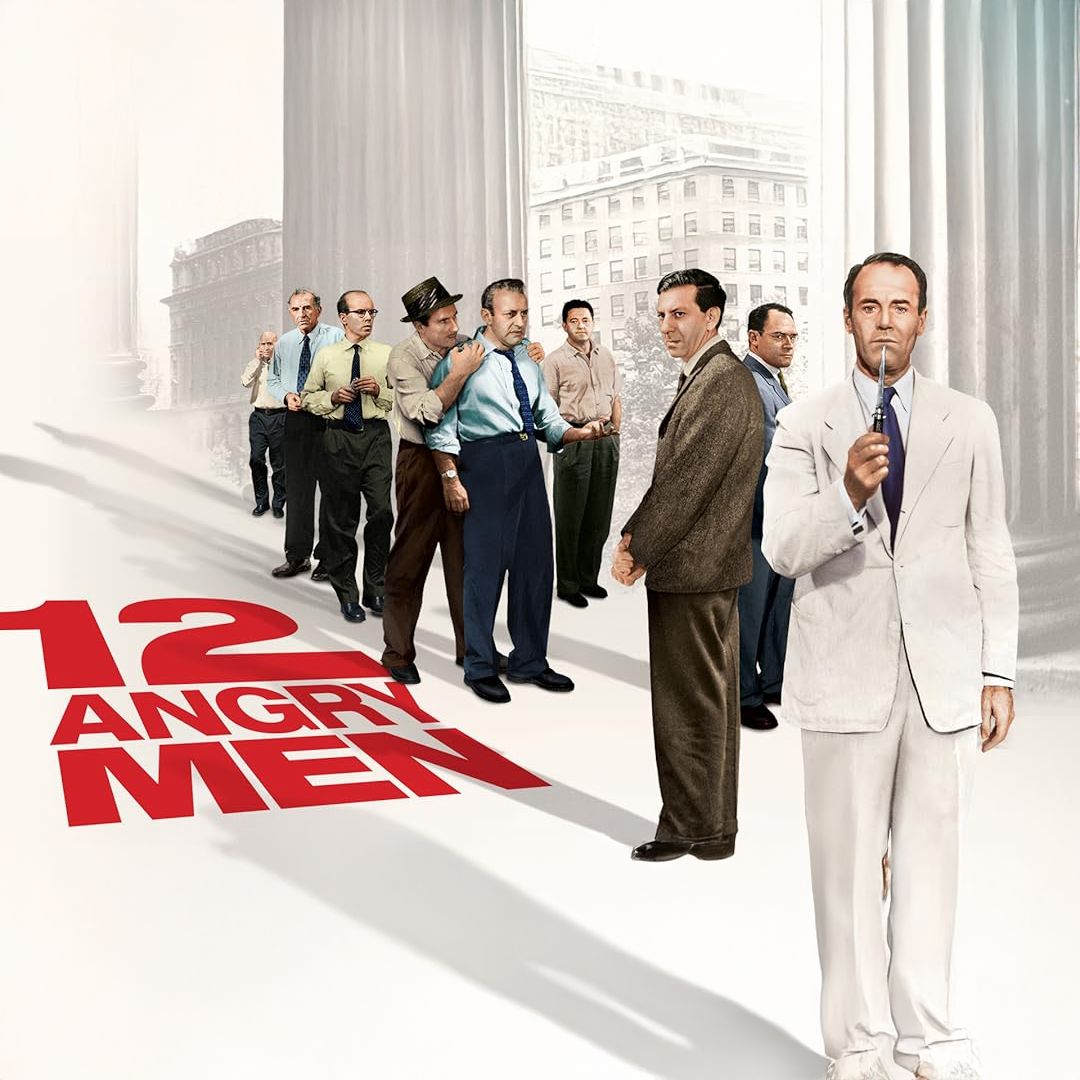
Most films win us over with spectacle: sweeping landscapes, elaborate sets, or tightly choreographed action. 12 Angry Men (1957), directed by Sidney Lumet in his feature debut, achieves the opposite. It strips cinema down to its barest essentials: a single room, twelve ordinary men, and one extraordinary moral test.
The Setup
The premise is deceptively simple. Twelve jurors are asked to reach a verdict on a young defendant accused of a serious crime. That’s the framework — but the film isn’t really about the defendant. It’s about the jurors, the flaws and biases they bring into the room, and the way collective judgment becomes a mirror of society itself. By refusing to cut away to flashbacks or external drama, Lumet forces us to live the process alongside them.
Directorial Precision
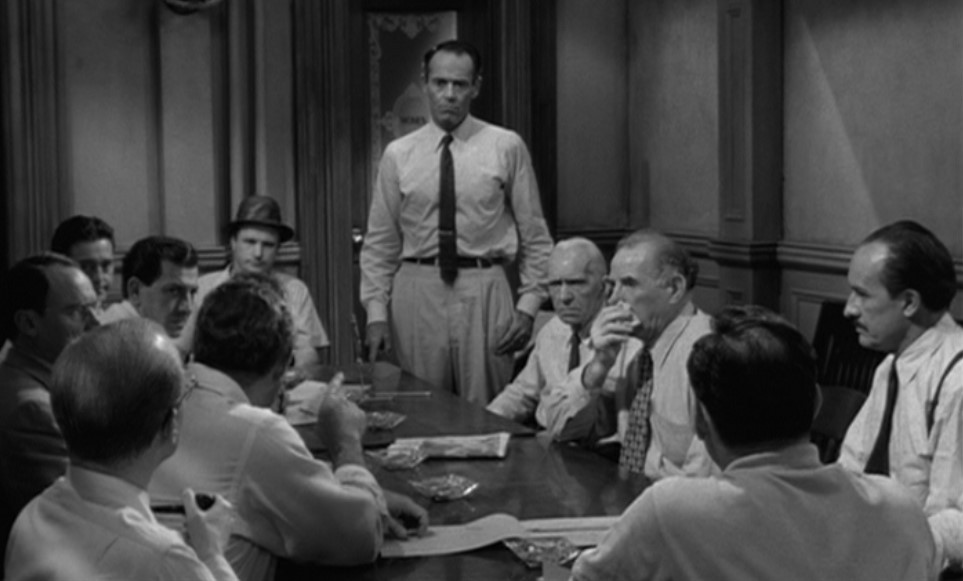
Sidney Lumet’s style is often described as invisible, but here it becomes a weapon. At the beginning, his camera keeps the room wide, letting characters breathe. As arguments sharpen, he gradually shortens the lens, moves closer, lowers the camera. What started as an open conversation becomes claustrophobic — you feel the walls closing in.
Blocking, the placement of actors in space, is equally purposeful. A man isolated at the table feels small. Two men confronting each other at opposite ends command the frame. Even shifts in posture or distance signal power struggles long before dialogue confirms them.
Lighting deepens the effect. It is a sweltering summer day; sweat beads on brows, shadows stretch across tired faces. The atmosphere itself becomes part of the conflict. And sound — minimal and restrained — emphasizes the ordinary: a fan, footsteps, rain outside. These simple elements, in Lumet’s hands, are as suspenseful as any orchestral score.
Themes Without End
Without ever leaving its one-room setup, 12 Angry Men explores enormous questions:
- What is justice?
- How do prejudice and class shape judgment?
- Can one voice alter the course of many?
The brilliance lies in how naturally these questions surface. They aren’t delivered as sermons but emerge through human friction: impatience, pride, empathy, anger.
Echoes in Modern Cinema
The film’s DNA is visible across decades:
- The Man from Earth (2007): A single-room conversation where suspense grows from ideas alone.
- Court (2014, India): A courtroom drama that uses quiet realism to expose systemic flaws.
- 12 (2007, Russia): A direct re-imagining, set against Chechen conflict, proving the story’s universality.
- Law & Order, Suits, and countless TV dramas: Episodes that hinge on jury debates or legal persuasion carry clear traces of Lumet’s model.
These works confirm that spectacle isn’t required for impact. Dialogue, performance, and moral weight can hold an audience as firmly as any blockbuster.
Why It Endures
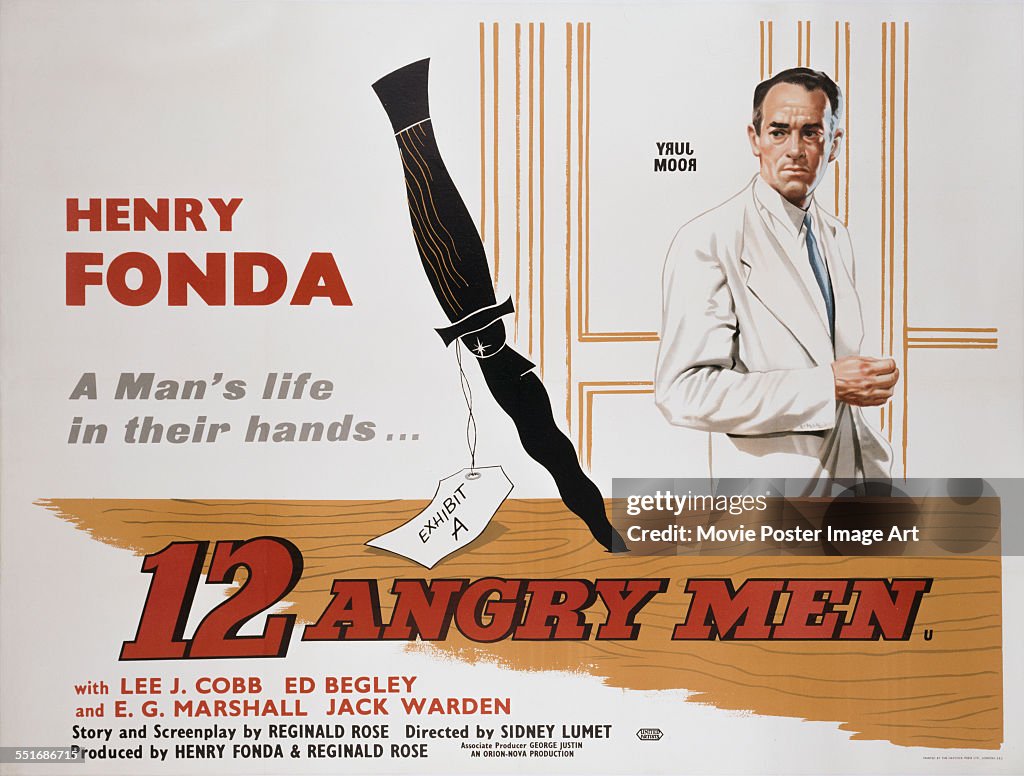
In many ways, 12 Angry Men is timeless because it is stripped of excess. Remove the jury, change the setting, and the story still resonates: groups debating truth, individuals struggling against bias, the power of doubt and conscience. For students of cinema, it is a directing masterclass. For audiences, it remains one of the most gripping films ever made with the simplest of tools.
ClueReel Meter: 9.5 / 10
A timeless masterclass in tension and direction. Stripped of spectacle, powered entirely by dialogue and conscience. The kind of film that makes you forget it was made nearly seven decades ago